


- Patient Stories
- Wang Xiulan


The Stove at Our Noodle Shop Almost Went Cold Forever – My Two Interventional Treatments at Uni-Asia
My name is Wang Xiulan. I'm 41, and I run a beef noodle shop with my husband in an old neighborhood of Chengdu. The shop isn't big, but the flame on our stove burns from morning till night, and our days have been steady and full of life. I never imagined that one day, that stove might not burn again.
Last fall, some regular customers said I looked pale and my eyes were a bit yellow. I thought it was just exhaustion from all the early mornings and late nights, so I didn't pay much attention. About half a month later, my belly was so bloated I couldn't eat, and my whole body started itching—so bad I couldn't sleep at night. I scratched my skin raw. My husband practically dragged me to the hospital. A contrast-enhanced CT scan revealed a fist-sized mass—a full 8 centimeters—in my right liver lobe, pressing hard against the bile duct. My liver function was a mess, and my bilirubin levels were terrifyingly high. The doctor said it was massive hepatocellular carcinoma, positioned right against major blood vessels, and inoperable.
I stood in the hospital hallway, my head buzzing. How could a perfectly healthy person suddenly have such a serious condition? My son was only in middle school. What would happen to our noodle shop without me?
In the days that followed, we went to several major hospitals and started radiotherapy and chemotherapy. As soon as the chemo drugs went in, I felt completely drained—I threw up so violently I couldn't even keep down a sip of water. My hair fell out in clumps, my white blood cell count dropped to nearly undetectable levels, and my platelets wouldn't rise either. The doctors were afraid of infection and bleeding, and eventually, even chemo had to be stopped. After several rounds of radiation, the tumor hadn't budged, but my jaundice kept getting worse. My skin turned as yellow as old newspaper. One doctor sent my husband out of the room and said softly to me, "If it's too much, you might want to go home and rest, eat whatever you like…" I understood what that meant—there was no hope.
Lying in bed back then, the same thought kept running through my mind: my son is still so young. If I'm gone, who will cook for him? Who will watch him grow up?
My husband didn't give up. He searched everywhere for information and learned from a patient support group about a hospital in Chengdu called Uni-Asia Cancer Hospital, which had gathered a team of top national experts in minimally invasive interventional oncology—specialists who use non-surgical methods to tackle tumors that conventional approaches had written off as "hopeless." He told me that Professors Liao Zhengyin and Zhang Jinshan there could insert a very thin tube from the groin area, thread it through the blood vessels all the way to the liver, find the arteries feeding the tumor, deliver medication directly into it, and then block those vessels. It's called "hepatic arterial interventional therapy." My husband held his phone up to me: "They don't need to cut you open. It's much gentler on the body. Lots of patients like you—who can't have surgery and can't tolerate chemo—have found a turning point there."
My eyes lit up, but I didn't dare to believe it fully. Still, for my son's sake, I said, "Let's go."
At Uni-Asia Cancer Hospital, Professor Liao Zhengyin studied my CT scans and lab reports for a long time. He didn't frown. Instead, he explained carefully to me and my husband: "Ms. Wang, although your tumor is large, its blood supply is well-defined—mainly fed by a few arteries. Your gallbladder and bile duct are compressed, which is why your jaundice is so severe. Since you can't tolerate chemo or radiation, we won't go that route. We'll try a different approach—two sessions of arterial intervention. The first time, we'll block the main feeding vessels and infuse the drug to shrink the tumor. Then, after a period of time, we'll do a second session to clean up the remaining small branches. Once the tumor shrinks, the jaundice will naturally resolve."
asked nervously, "Will it hurt? Do you have to open me up?"
Professor Liao smiled and shook his head. "No surgery. We just apply a little local anesthetic at the groin, insert a catheter thinner than a ballpoint pen refill, and guide it through the blood vessels to your liver. You'll be awake the whole time. If you feel any discomfort, just tell us. After it's done, you lie flat for a few hours, and then you can move around."
At that moment, I felt like a breath of fresh air finally reached my chest after being suffocated for so long.
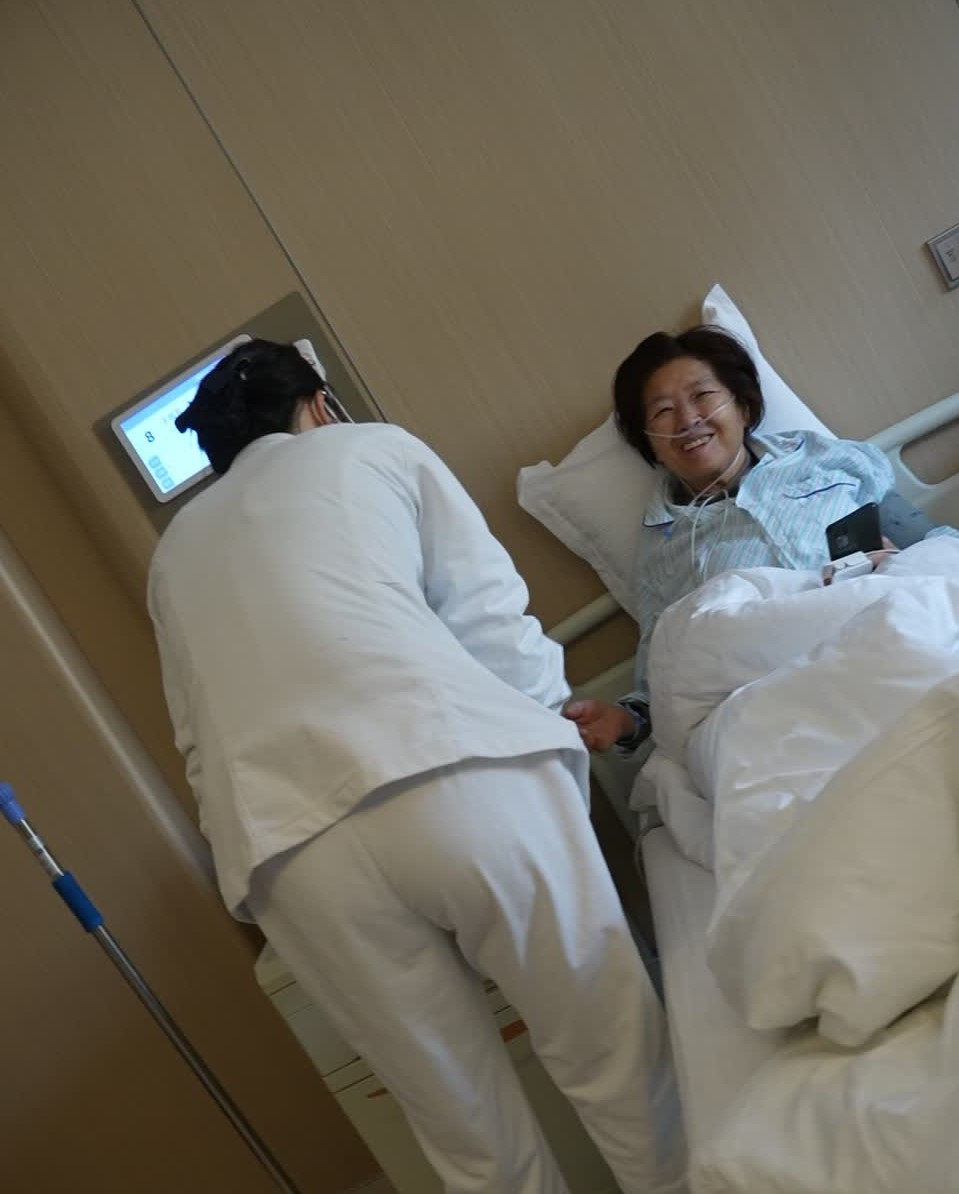
For my first interventional treatment, I walked into the procedure room on my own feet. Lying under the DSA machine, I watched my blood vessels appear on the screen like the branches of a tree. Professor Liao's voice came through from time to time: "Catheter is at the hepatic artery now." "Starting drug infusion." "Now performing embolization—don't be nervous." In less than an hour, a small gauze pad was taped over my groin, and I was wheeled back to my room. Aside from a mild fever and slight nausea, I felt almost none of the debilitating side effects I'd dreaded. The next morning, with my husband's help, I tried to get out of bed. My legs felt a little weak, but I stood steadily. On the third day, when I looked in the mirror, I was stunned—the yellow in the whites of my eyes had faded significantly. Even better, at noon that day, I finished an entire bowl of congee the nurse brought me—the first real meal I'd kept down in months.
A little over a month later, I came back for my second intervention. This time, I felt much more at ease. During his rounds, Professor Liao hung both sets of scans side by side on the lightbox and pointed to the screen: "Look, after the first treatment, the tumor has already shrunk from 8 cm to just over 6 cm. The bile duct compression is relieved, and your jaundice levels are almost back to normal. This time, we'll add a little more fire and cut off the remaining blood supply. " I stared at those two rows of black-and-white images. That once-imposing white mass on my right liver lobe had deflated like a punctured ball, surrounded by dense deposits of lipiodol. Tears poured down my face—not from pain, but from joy.
On the third day after the procedure, the bloating in my chest and belly had completely subsided. I was discharged on the fourth day. The nurses reminded me not to drink alcohol, not to overexert myself, to maintain good nutrition, and to come back for regular checkups. I nodded and remembered every word.
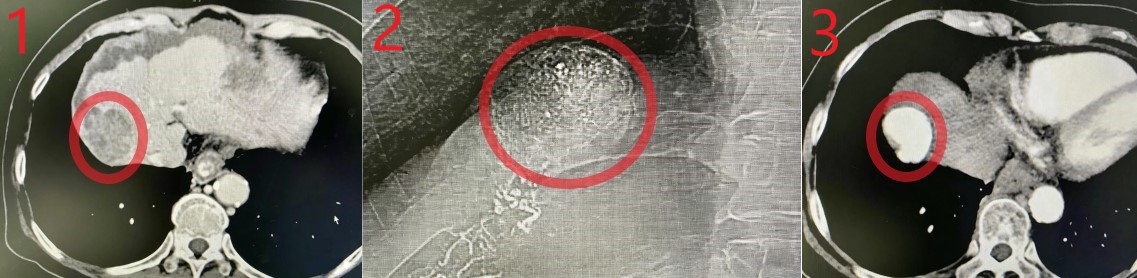
Image note: Pre-treatment contrast-enhanced abdominal CT shows a large mass in the right hepatic lobe with ill-defined borders and compression of the adjacent bile duct; post-treatment CT shows significant reduction in tumor volume with dense lipiodol deposition and no obvious enhancement, with bile duct compression resolved.
After returning home, I slowly started to be able to stand by the stove again and help my husband out. We reopened the noodle shop. Regular customers asked where we'd been all these months—I just smiled and said I'd taken care of a minor health issue. Now, I can once again cook a steaming bowl of braised beef noodles for my son with my own hands and watch him eat until he's dripping with sweat. That feeling of reassurance is worth more than anything.
Professor Liao said I still need to come back for regular follow-ups. But I'm not scared. It's not about avoiding hardships in life—it's about finding a way through them. When I was at my darkest, Uni-Asia Cancer Hospital lit the path for me. The flame on my little noodle shop's stove never went out after all.
This case is based on a real patient's experience, with privacy protections applied. It does not constitute a medical guarantee or promise of treatment outcomes.