


- Patient Stories
- Zhang Suying
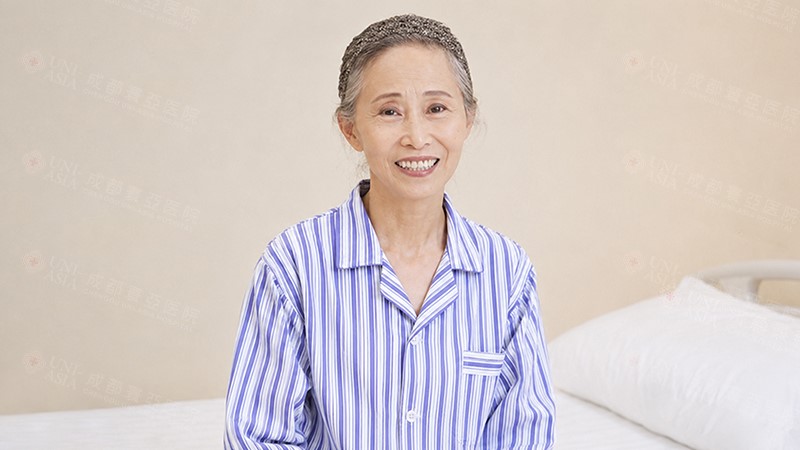
I spent half my life dancing. This time, Uni-Asia helped me get back on my feet.
My name is Suying. Before I retired, I was a dancer. I spent the greater part of my life on stage, where every movement of my body answered my command. But looking back now, the day I was diagnosed with stomach cancer four years ago was the first time in my life I ever felt that this body of mine had begun to betray me.
That year, I underwent a total gastrectomy, followed by chemotherapy and radiotherapy. The side effects of the chemoradiation nearly took my life—my platelet count plummeted to the single digits at one point. But I pulled through. I told myself the tumor had been completely removed, that I had endured the worst of it, and that I could finally settle into a quiet, uneventful life.
Then, last February, my belly started aching again, a dull, lingering pain. The test results came back—metastases had spread throughout my abdominal cavity and into my liver as well. Worst of all, the tumors had squeezed my intestines shut. I couldn't eat. I couldn't drink. Even passing gas or having a bowel movement became a distant, unreachable hope. I went from one hospital to another, but in the end, they all shook their heads. "Your body is too weak. Your platelet count won't come up. Your bowel is completely obstructed. Another operation is out of the question, and you couldn't withstand more chemo or radiation." All they could offer, they said, was a tube for decompression and IV nutrition — measures to buy a little time, one day at a time.
Those days, I lay in bed, tubes running in and out of my body, staring at the ceiling. I felt like an oil lamp running out of fuel, its flame growing smaller and smaller. But I couldn't accept it. I had fought so hard for four long years. How could it all end here?
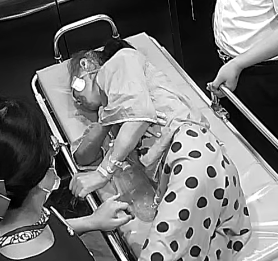
Ms.Suying's condition upon admission to our hospital
My family searched everywhere for answers. That's when we discovered Uni-Asia Hospital in Chengdu—a specialised, high-end medical centre dedicated to minimally invasive cancer treatment, serving patients from around the world. What immediately gave us confidence was its medical team: leading experts who had previously worked at China's top-ranked public hospitals. Professors Zhang Jinshan, Xiao Yueyong, Liao Zhengyin, Luo Xiaoping, Yi Cheng, Li Zhiping, and Hu Xiaokun are all highly respected pioneers in their respective fields, with decades of clinical experience and outstanding achievements. But what truly gave me hope was the hospital's expertise in minimally invasive interventional therapy. By then, one hospital after another had told me that surgery was no longer an option and that there were no better treatments available. For someone in my situation, this wasn't just another medical opinion—it was an entirely new possibility, a treatment path I never even knew existed.
As soon as we got in touch with Uni-Asia Hospital, they sent an ambulance to pick me up that very same day. When I arrived, I was lying flat and completely limp on the stretcher—I didn't even have the strength to turn over. My pain score was alarmingly high. Professor Liao Zhengyin, Professor Luo Xiaoping, and Director Wu Chaobo immediately held an emergency MDT meeting and tailored a treatment plan specifically for me. To be honest, I couldn't fully grasp all the medical details at the time, but there was one thing they said that I will never forget: "Auntie Suying, we have a way forward. Let's fight this together."
On the day of the procedure, I was wheeled into the operating room. Director Liao Zhengyin performed the operation with a gentle hand, telling me softly to stay calm. Throughout the whole process, I could hear them exchanging a few quiet words from time to time, their voices steady and reassuring. In less than an hour, I was wheeled back to my room.
The next morning, I passed gas for the first time in what felt like forever. I'm not ashamed to admit it—in that moment, tears nearly welled up in my eyes. That door in my belly had finally opened. On the fifth day, during the follow-up exam, the doctor told me the tumors on the scan were visibly smaller than before. They clamped the decompression tube and let me try sipping a little water. By the seventh day, I was able to use the bathroom on my own, normally. On the twenty-first day, that decompression tube I had worn for months was finally removed. Step by step, I went from being someone who could do nothing but lie in bed—feeling like a useless burden—back to being myself again. The Suying who can walk on her own and eat on her own.
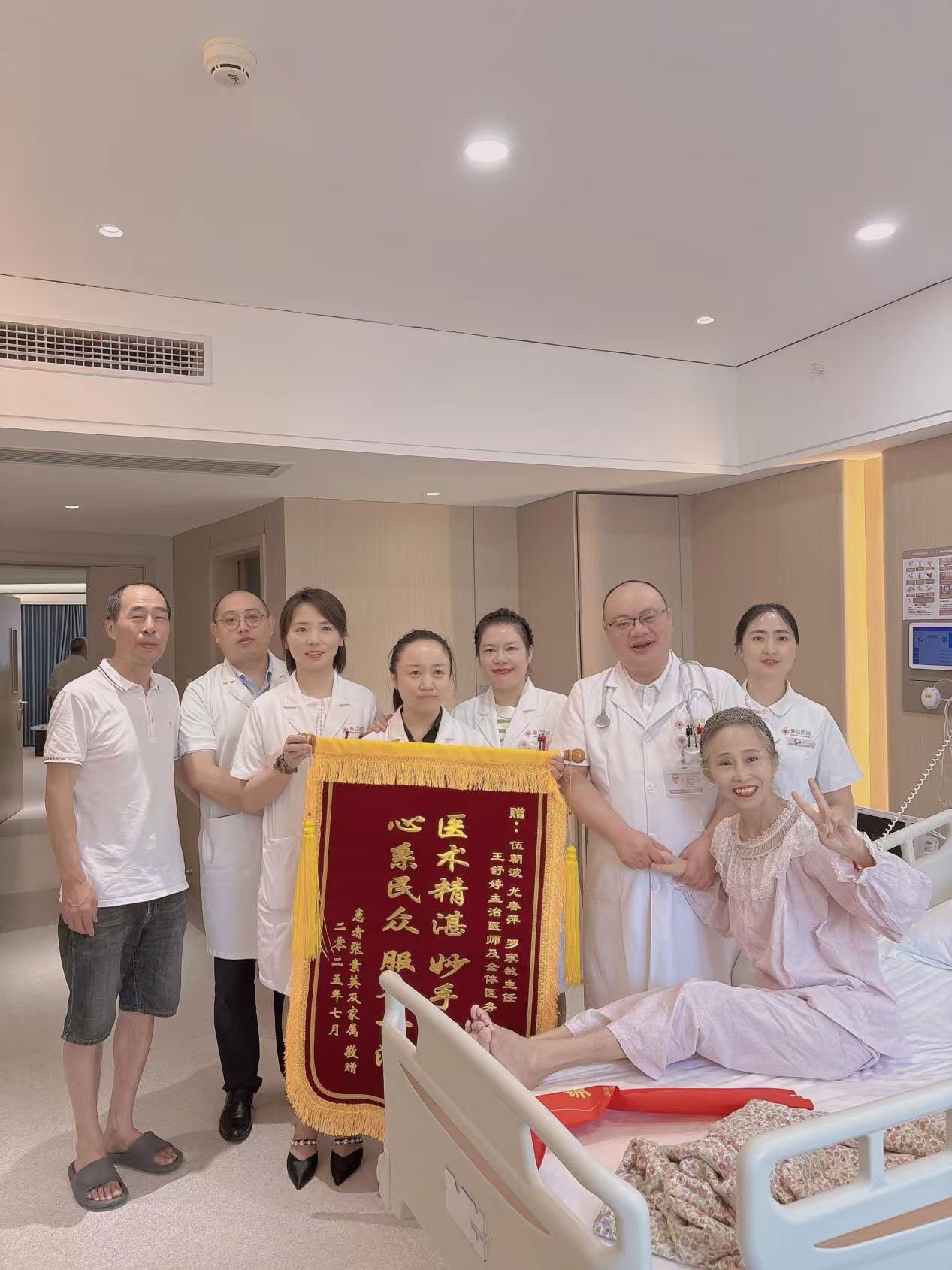
Ms.Suying's (seated on her bed) condition at the time of discharge
Now I'm back home. I eat when I'm hungry, sleep when I'm tired, and every day I meet up with my old friends to rehearse the dances we once performed together. Sometimes, as I walk down the street, I find myself thinking back to those days on stage. Life, in many ways, is like a dance. Falling isn't the hardest part—the hardest part is having no one there to help you back up. I was fortunate. In the darkest chapter of my life, the doctors at Uni-Asia reached out their hands and helped me stand again. For that, I will always be grateful. Thank you, from the bottom of my heart.